Keeping Indoor Cats Healthy: Weight, Exercise, and Wellbeing
Indoor cats enjoy a remarkable safety advantage over their outdoor counterparts — but that cosy life on the sofa comes with its own health hazards. Understanding how to manage weight, stimulate activity, and nurture your cat’s mental state is the difference between a pet that merely survives indoors and one that genuinely flourishes.
The Indoor Advantage — and Its Hidden Costs
Indoor cats typically live between 12 and 18 years, with well-cared-for individuals sometimes surpassing 20. Outdoor cats, by contrast, average just 2 to 5 years, facing predators, traffic, disease, and injury on a daily basis. So keeping a cat inside is, by almost every measure, the safer choice.
The tradeoff is that indoor living dramatically reduces the amount of spontaneous movement a cat would otherwise get. A cat that roams even a modest territory burns far more energy than one navigating a two-bedroom apartment. This sedentary lifestyle, combined with the ease of ad-lib feeding, sets the stage for the most common health problem facing pet cats today: obesity.
The Weight Problem: How Common, and Why It Matters
Studies across developed countries suggest that anywhere from 11.5% to over 60% of pet cats are carrying excess weight. The cats most at risk are neutered or spayed individuals — because sterilisation lowers metabolic rate — middle-aged adults, and those kept exclusively indoors where opportunities for energetic activity are limited.
Weight gain is not a cosmetic concern. Excess body fat is directly linked to a shortened lifespan and a range of serious conditions including type 2 diabetes, osteoarthritis, heart disease, urinary tract problems, and fatty liver disease. An overweight cat may also suffer from reduced mobility that makes grooming difficult, which in turn worsens skin and coat health. Research consistently shows that attempted weight loss in already-obese cats is challenging, making prevention far more effective than cure.
Knowing What a Healthy Weight Looks Like
Because cats come in such varied sizes and breeds, a single target number on the scales means very little without context. Vets use a Body Condition Score (BCS) — typically on a 1–9 scale — to give a standardised picture of whether a cat is underweight, ideal, or overweight.
An ideal score of 5 out of 9 means you can feel the ribs easily beneath a thin layer of fat, the cat has a visible waistline when viewed from above, and the abdomen rises slightly behind the ribcage when viewed from the side. A cat scoring 7 or above is classified as overweight; at 8 or 9, severely obese.
You can do a simple check at home. Run your hands along your cat’s sides: if the ribs feel like the padded palm of your hand rather than distinct bumps, excess weight is likely. Look down at your cat from above — a cat at a healthy weight shows a gentle hourglass shape, not a round barrel. Your vet can perform a formal assessment combining BCS with a Muscle Condition Score for an even clearer picture.
Feeding: Quality, Quantity, and Routine
Portion control is one of the most powerful tools available to indoor cat owners. A typical 10-pound indoor cat needs roughly 200 calories per day — meaningfully less than a more active outdoor cat of the same size. Free-feeding (leaving a bowl constantly topped up) almost inevitably leads to overconsumption, since cats are not reliably self-regulating eaters when food is always available.
Most veterinary nutritionists recommend two measured meals per day, spaced morning and evening. Calculate daily calorie needs based on your cat’s current weight and body condition, check the calorie density of the food you use (usually listed per cup or per 100g on the packaging), and serve accordingly — ideally using a kitchen scale rather than volume measures, which can be inconsistent.
Wet food has a role to play beyond taste preference. Its higher moisture content supports urinary tract health, and its lower calorie density per gram can make portion sizes feel more satisfying. Puzzle feeders and slow-feed bowls add an element of foraging to mealtime, slowing eating speed and providing mild mental stimulation — a two-for-one benefit. Always consult your vet before making significant changes to an existing cat’s diet, particularly if weight loss is the goal.
Exercise: Getting an Indoor Cat Moving
Cats are not naturally built for sustained aerobic effort in the way dogs are, but short bursts of intense activity mirror their natural hunting pattern perfectly. The goal is to replicate — in a safe, indoor context — the stalk, pounce, and catch cycle that keeps wild felids physically and mentally sharp.
Interactive play with wand toys, feather teasers, and laser pointers (always ending with a tangible catch so the cat feels the hunt is complete) is the most effective way to get a cat exercising. Sessions of 10–15 minutes, two to three times daily for adult cats provide meaningful physical activity without overstressing joints. Younger cats and kittens can happily sustain more frequent bursts. The key is consistency: short, regular sessions beat occasional marathon play days.
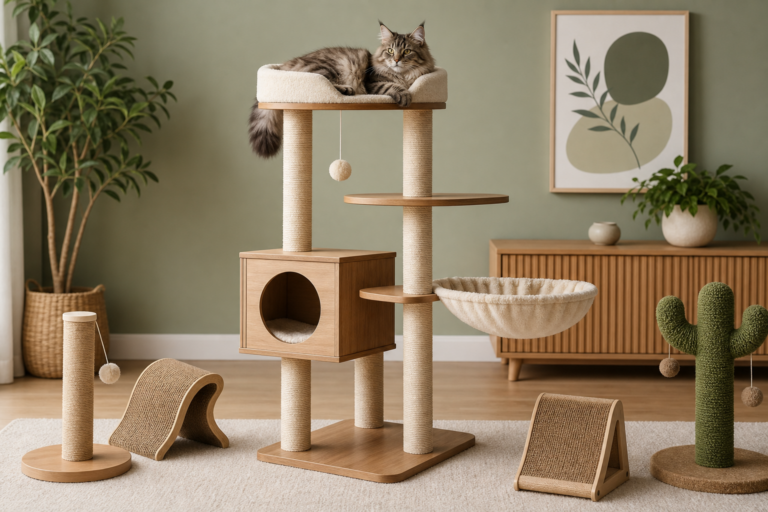
Vertical space is often overlooked as an exercise tool. A cat tree, wall-mounted climbing shelves, or a sturdy bookcase with clear perches encourages jumping, climbing, and stretching — natural movements that engage the core and hindquarters. Positioning these near windows gives cats a visual stimulus (watching birds, squirrels, or passing people) that sustains interest independently.
Environmental Enrichment and Mental Wellbeing
Physical health and mental health are inseparable in cats. A bored or stressed cat is far more likely to overeat, overgroom, become withdrawn, or develop unwanted behaviours such as furniture scratching or house soiling. Indoor confinement, without thoughtful enrichment, can gradually erode a cat’s quality of life even when all its basic physical needs are met.
Effective enrichment works across several dimensions:
- Foraging opportunities: Scatter feeding, hide kibble around the home, or use puzzle feeders to make cats work for part of their daily food. This mimics natural hunting behaviour and occupies the mind.
- Sensory variety: Rotate toys so familiarity doesn’t breed indifference. Introduce safe scent enrichment such as dried catnip, silver vine, or valerian — different cats respond to different herbs.
- Social interaction: Many cats thrive with a companion, though introductions must be managed carefully. Even for solo cats, predictable daily interaction with their owner — scheduled play, grooming, or simply quiet proximity — provides important social grounding.
- Safe outdoor access: A cat-proofed balcony, a garden run, or a harness-and-lead routine can bridge the gap between indoor safety and the sensory richness of the outside world, without exposing cats to traffic or disease.
Recognising When Something Is Wrong
Cats mask discomfort and distress instinctively, so early warning signs can be subtle. Weight gain that appears gradually over months is easy to miss — which is why tracking BCS every few weeks, and keeping vet appointments even when the cat seems well, matters.
Signs that a cat’s mental wellbeing may be suffering include excessive sleeping beyond their normal pattern, hiding more than usual, changes in appetite, compulsive overgrooming leading to bald patches, increased vocalisation, or unprovoked aggression. These are not simply personality quirks — they are signals worth discussing with a vet or a feline behaviour specialist. Catching stress-related or weight-related problems early gives the best chance of a straightforward resolution.
FAQ
How do I know if my cat is a healthy weight without a vet visit?
The rib and waist check described above is a reliable starting point. Stand behind your cat and look down — you should see a gentle inward curve at the waist, not a straight-sided or convex outline. Feel along the ribcage: ribs should be palpable without pressing hard. If you’re uncertain, most vets are happy to do a quick weight check between full appointments, sometimes at no charge.
How much playtime does an indoor cat actually need each day?
Aim for a minimum of two structured interactive play sessions daily, each lasting around 10–15 minutes. Total active play time of 20–30 minutes spread across the day is a reasonable target for a healthy adult. Senior cats or those with joint issues may prefer shorter, gentler sessions, while kittens will happily absorb more. The quality of engagement — toys that move unpredictably, mimic prey, and require the cat to stalk and pounce — matters more than raw time.
Can boredom make a cat physically unwell?
Yes. Chronic boredom and understimulation can trigger stress responses that manifest physically — including stress-induced cystitis (bladder inflammation), compulsive overgrooming that causes skin damage, and changes to appetite that contribute to weight gain or loss. Mental enrichment is not a luxury; it is part of the same health maintenance picture as good nutrition and regular exercise.
When should I see a vet specifically about my cat’s weight?
If your cat has visibly gained weight, if you can no longer feel its ribs without significant pressure, or if you’ve attempted dietary changes without success over several weeks, a vet visit is warranted. A vet can rule out underlying medical causes of weight gain (such as hypothyroidism or fluid retention), calculate a safe calorie target, and recommend prescription weight-management diets if needed. Crash dieting in cats is genuinely dangerous — rapid weight loss can cause hepatic lipidosis, a potentially fatal liver condition — so professional guidance is essential for any cat that needs to lose more than a small amount of weight.
Sources
- icatcare.org
- vcahospitals.com
- pmc.ncbi.nlm.nih.gov
- preventivevet.com
- petmd.com
- animalhumanesociety.org
- hillspet.com
- frontiersin.org