
Why Does My Cat Always Know? The Science Behind Feline Anticipation
Cats seem to read your mind — but they’re really just pattern machines with exceptional senses and fast-forming memories. Here’s the science behind it.
Cats seem to read your mind — but they’re really just pattern machines with exceptional senses and fast-forming memories. Here’s the science behind it.
The whole job is preventing a successful chase from ever happening. A step-by-step guide to puppy-cat introductions — from scent swapping to baby gates to choosing the right Feliway formula.
The key to a puppy-cat household isn’t the introduction itself — it’s preventing the first chase. Here’s how to set things up so both species can coexist.
Building a deep bond with your cat is less about grand gestures and more about reading feline signals. Here’s what the science actually says.
Purring, kneading, meowing, scratching, and those subtle tail and ear signals all carry meaning. Here is a clear, vet-informed guide to reading your cat’s everyday behavior and knowing when a change is worth a closer look.
Cats are experts at hiding distress—learn to spot the subtle signs of feline stress and discover vet-backed strategies to help your cat feel safe, calm, and content.
Cat spraying is deliberate scent communication, not bad behaviour — learn the real reasons cats do it and the most effective ways to stop it.
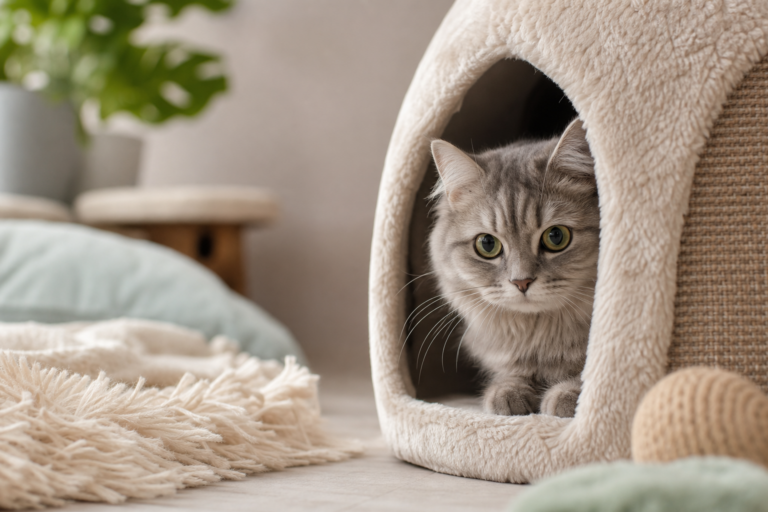
Fearful cats can learn to feel safe and thrive with patience and the right approach. Discover expert-backed techniques to help your shy cat build lasting confidence.
Cats have a reputation for being untrainable, but science says otherwise. Discover how positive reinforcement, clicker training, and a few key tricks can unlock your cat’s hidden potential.
Cats evolved the meow specifically to communicate with humans — so when yours won’t stop, they’re trying to tell you something important. Here’s what it could mean.