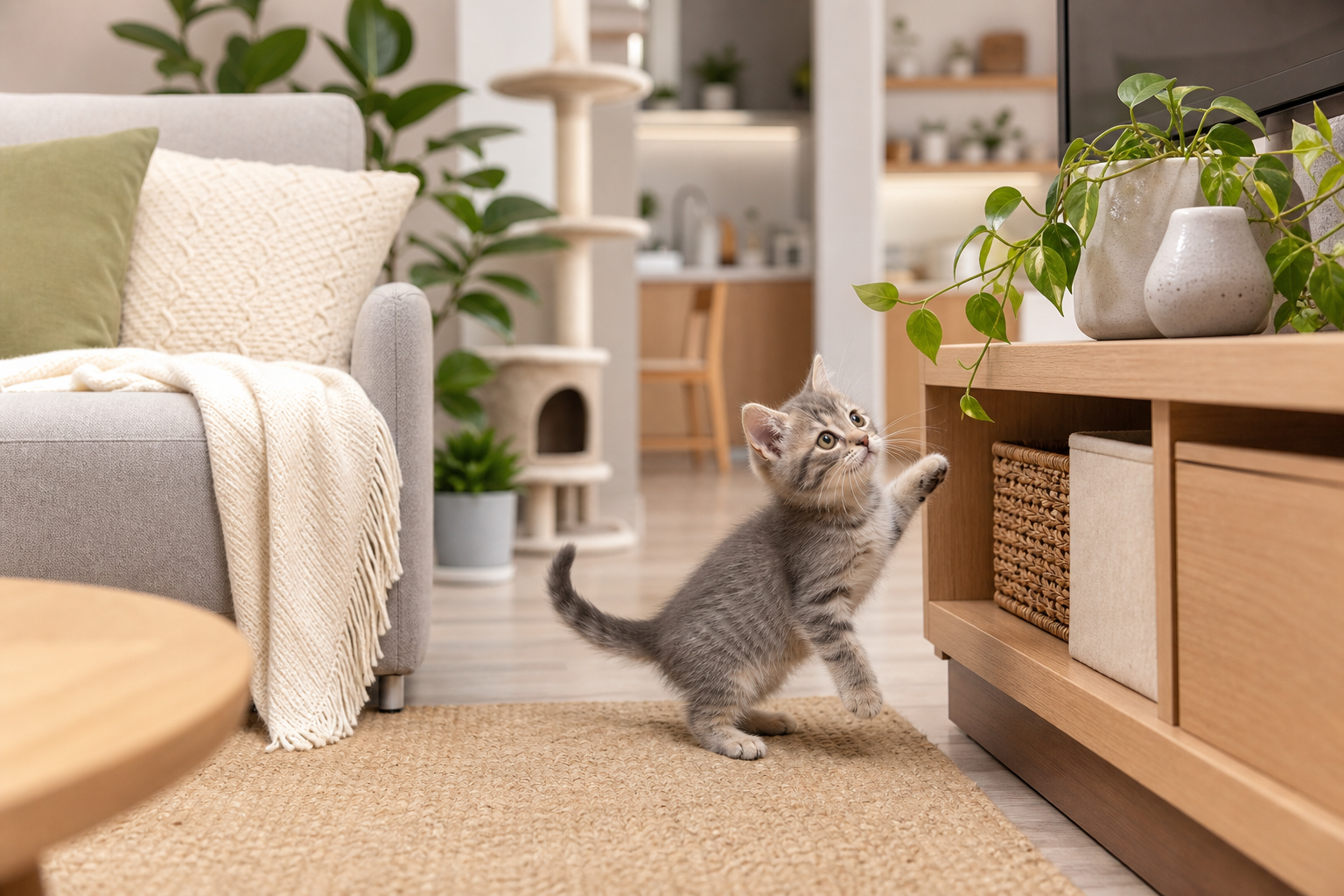
Kitten-Proofing Your Home: A Room-by-Room Safety Checklist
Bringing a kitten home is one of life’s great joys — but those tiny, velvet-pawed explorers have a talent for finding every hazard your house has to offer. A little preparation before their arrival can prevent accidents, emergency vet visits, and heartbreak.
Why Kittens Need Special Protection
Kittens are born curious. Unlike adult cats that have learned which things to avoid, young kittens investigate the world with their mouths, paws, and boundless energy. They can squeeze into impossibly small spaces, leap onto surfaces before their coordination fully develops, and chew through objects out of teething discomfort or sheer playfulness. Most injuries and poisonings in young cats occur in the first few months of life, when everything is new and no learned caution exists yet.
The Kitchen: Your Highest-Risk Room
The kitchen poses more hazards per square foot than any other room in the house. Hot surfaces — stovetops, toasters, and electric kettles — can burn delicate paws and noses on contact. Turn pot handles inward so a curious cat can’t pull a pot of boiling water off the stove. Many everyday human foods are outright toxic to cats: onions and garlic in any form damage red blood cells, grapes and raisins can trigger kidney failure, xylitol (found in many sugar-free products and some peanut butters) is extremely dangerous, and even small amounts of chocolate can cause vomiting, tremors, and cardiac arrhythmias.
Kitchen appliances are another underestimated hazard. Dishwashers left open become irresistible climbing frames; always check inside before running a cycle. The same applies to refrigerators — a kitten can slip inside unnoticed in seconds while you’re loading groceries. Secure garbage cans with locking lids to prevent access to bones, plastic packaging, or spoiled food.
Bathroom Dangers
The bathroom is deceptively risky. Keep toilet lids closed at all times — a small kitten can fall in and drown, or be seriously harmed by residual cleaning chemicals in the bowl. Medications are among the leading causes of accidental pet poisoning. Common over-the-counter pain relievers are particularly deadly: ibuprofen and naproxen can cause gastrointestinal ulcers and kidney damage, while even a single acetaminophen tablet can be fatal by destroying a cat’s red blood cells. Store all medications — including vitamins and supplements — in closed cabinets, never on countertops.
Small bathroom items like hair ties, rubber bands, dental floss, and cotton swabs are irresistible to kittens and pose a serious intestinal blockage risk if swallowed. Keep them in drawers or sealed containers at all times.
Living Areas: Cords, Cables, and Climbing
Electrical cords are among the most commonly cited kitten hazards. Chewing through a live wire can cause electrocution, severe burns to the mouth, or cardiac arrest. Run cables through protective cord covers or flexible tubing, tuck them behind furniture, or apply bitter-tasting pet deterrent spray to exposed sections. Blind and curtain cords present a separate danger — strangulation — so choose cordless window coverings or keep cords tied and looped well out of reach.
Kittens love to climb, and tall or unstable furniture can tip. Anchor heavy bookshelves and wardrobes to walls using anti-tip straps — the same type sold for child-proofing. Also inspect reclining chairs and sleeper sofas: the folding mechanisms in these pieces of furniture can trap and crush a small animal that has crept inside.
Small objects scattered on tables and shelves — coins, buttons, rubber bands, paper clips, string, sewing needles, and holiday tinsel — are all choking or blockage risks. Thread and yarn deserve special caution: if a kitten begins swallowing a length of string and it catches on the tongue or a tooth, the intestines can bunch and even perforate as the body tries to move it along.
Laundry Room
Always check inside the washer and dryer before starting a cycle. Warm, dark, enclosed spaces attract kittens, and the consequences of an unnoticed cat in a running machine are fatal. Dryer sheets contain cationic detergents that cause drooling, vomiting, and in larger amounts, neurological effects — keep them out of reach. Concentrated laundry pods are particularly dangerous; store them in locked or elevated cabinets far from paws and teeth.
Toxic Plants: A Hidden Threat
Many popular houseplants are highly toxic to cats, and kittens — which tend to nibble on greenery more readily than adult cats — are at elevated risk. Some of the most dangerous include:
- True lilies (Easter, Asiatic, Oriental, and Daylily varieties): Every part of the plant — leaves, stems, petals, and even pollen — can cause life-threatening kidney failure. There is no safe level of exposure.
- Sago palm: All parts are toxic, with the seeds being most lethal. Ingestion can cause severe liver failure and dangerous bleeding disorders.
- Oleander: Contains cardiac glycosides that cause serious heart arrhythmias and dangerously low blood pressure.
- Dieffenbachia and Philodendrons: Contain calcium oxalate crystals that cause intense oral burning, excessive drooling, and difficulty swallowing.
- Yews: All varieties are highly toxic to the heart and digestive system.
Before bringing any plant into your home, verify its safety using the ASPCA’s comprehensive online plant list. When in doubt, choose kitten-safe alternatives like spider plants, Boston ferns, or African violets, and keep even non-toxic plants elevated to discourage nibbling habits from forming.
Chemical Hazards and Flea Treatments
Cleaning products, antifreeze (which has a sweet taste attractive to animals), paint, and pesticides should all be stored in cabinets fitted with child-safety latches. One commonly overlooked danger is permethrin, an insecticide found in many dog flea treatments and some household sprays. Cats lack the liver enzyme needed to metabolize permethrin, and exposure — even through contact with a recently treated dog — can cause drooling, tremors, and seizures. Always use only flea products specifically formulated and labeled for cats, and consult your veterinarian before applying any topical treatment to a kitten under a certain weight or age threshold.
Windows, Balconies, and Falls
Despite the enduring myth that cats always land safely, falls from windows and balconies cause serious injuries — a pattern so common that veterinarians have given it a name: high-rise syndrome. Fit all accessible windows with secure screens (standard fly screens can be pushed out by a determined cat), and block balcony railings with mesh or plexiglass panels. Never rely on a kitten’s underdeveloped instincts to keep it safe at height.
A Quick Room-by-Room Checklist
- Kitchen: Latch lower cabinets, secure garbage, check all appliances before closing or running them, remove toxic foods from counters.
- Bathroom: Close the toilet lid, lock medications away, remove hair ties and dental floss from reach.
- Living areas: Cover or tuck all electrical cords, remove small objects, anchor tall furniture, eliminate dangling blind cords.
- Laundry: Check washer and dryer before every use, store pods and detergent in locked cabinets.
- Bedroom: Store jewelry and small electronics in drawers; verify window screens are secure.
- Garage: Treat it as completely off-limits or lock away all antifreeze, pesticides, fertilizers, and sharp tools.
- Throughout: Audit all houseplants and remove or relocate toxic species; install cabinet latches; store all chemicals out of reach.
FAQ
At what age can a kitten safely roam the whole house?
Most veterinarians recommend confining a new kitten to one or two fully kitten-proofed rooms for the first few weeks, then gradually expanding access as the kitten develops better coordination and you learn its habits. By around six months, most kittens can navigate a well-proofed home under supervision — though hazards like toxic plants and unsecured cords remain dangerous at any age.
What should I do if I think my kitten has swallowed something toxic?
Contact your veterinarian or the ASPCA Animal Poison Control Center immediately at (888) 426-4435. Do not wait for symptoms to appear — with certain poisons such as true lilies, treatment is most effective within the first few hours. Bring the packaging of any suspected substance, or a sample of the plant, to your vet appointment if you can do so safely.
Are essential oils safe to use around kittens?
No. Many essential oils — including tea tree, eucalyptus, peppermint, cinnamon, and citrus oils — are toxic to cats when applied to the skin, ingested, or inhaled in concentrated amounts. Because cats groom themselves constantly, residues on their fur can quickly lead to internal exposure. Avoid diffusing essential oils in spaces where your kitten spends time, and never apply them directly to a cat’s skin or coat.
Do I need to kitten-proof the garage?
Absolutely. Garages frequently contain some of the most concentrated hazards in a home: antifreeze (ethylene glycol is extremely toxic and tastes sweet to animals), motor oil, pesticides, fertilizers, and sharp tools. If your kitten could access the garage, either keep it completely off-limits with a secure door, or store all chemicals in locked cabinets and sweep regularly for small dropped items like screws or nails.
Sources
- aspca.org
- aspca.org
- petmd.com
- catvia.com
- vetmed.tamu.edu
- aspcapetinsurance.com
- chewy.com
- maine-coon-cat-nation.com