How to Care for Orphaned or Bottle-Fed Kittens: A Complete Guide
Finding a litter of newborn kittens without a mother — or being handed one by a neighbor — is an experience that demands immediate, informed action. Neonatal kittens are extraordinarily fragile: without proper warmth, nutrition, and stimulation, they can deteriorate within hours. But with the right knowledge and commitment, many orphaned kittens thrive and grow into healthy adults.
Should You Intervene?
Before picking up kittens you’ve found outdoors, pause. A mother cat often leaves her litter for several hours at a time to hunt or rest, and stepping in too early can do more harm than good. Watch the kittens from a safe distance for two to four hours. If the mother does not return — or if the kittens are crying continuously, visibly cold, or in immediate danger — intervention is appropriate. Kittens that are clearly sick, injured, or covered in flies require urgent veterinary attention regardless of whether a mother is present.
Setting Up a Warm, Safe Environment
Maintaining the right temperature is just as critical as feeding during the first weeks of life. A newborn kitten cannot regulate its own body temperature and depends entirely on external warmth. The nesting area should be kept at 85–90°F (29–32°C) for the first week, gradually reducing to around 80°F (27°C) by weeks three and four. A pet-safe heating pad set to low — wrapped in a layer of fleece or towels so the kitten is never in direct contact with the heating element — placed under one half of the nesting space works well. Leaving part of the space unheated allows kittens to crawl away from the heat if they become too warm.
House the kittens in a clean carrier or box lined with soft bedding, kept in a quiet, draft-free area away from other pets. Stress and cold are two of the most common killers of neonatal kittens, so a consistently calm, warm environment is non-negotiable.
Choosing the Right Formula
One of the most dangerous mistakes people make is feeding cow’s milk to kittens. Cow’s milk lacks the protein, fat, and essential amino acids — including taurine — that kittens need, and its high lactose content will almost certainly cause diarrhea and potentially fatal dehydration. Always use a commercial kitten milk replacer (KMR), such as PetAg KMR or Breeder’s Edge Foster Care. These products are formulated to approximate the nutritional profile of a queen’s milk and are available at most pet supply stores and veterinary clinics.
Powdered formula should be mixed fresh each day and kept refrigerated. Discard any prepared formula that hasn’t been used within 24 hours, and never leave warmed formula sitting out for more than an hour. Never use a microwave to warm the formula — this creates dangerous hot spots that can burn a kitten’s mouth and esophagus. Instead, warm the bottle by placing it in a cup of hot water for a few minutes, then test a drop on your inner wrist. It should feel comfortably warm — around 95–102°F (35–39°C).
How Often and How Much to Feed
Newborn kittens have tiny stomachs and burn through energy rapidly, so they need to eat very frequently — especially during the first two weeks. A general feeding schedule based on age looks like this:
- 0–1 week old: Every 2–3 hours (7–8 feedings per day), approximately 2–6 ml per feeding
- 1–2 weeks old: Every 3 hours, approximately 6–10 ml per feeding
- 2–3 weeks old: Every 3–4 hours, approximately 10–14 ml per feeding
- 3–4 weeks old: Every 4–5 hours, approximately 14–18 ml per feeding
- 4–5 weeks old: Every 5–6 hours, approximately 18–22 ml per feeding as weaning begins
These are approximate figures — a kitten’s weight should guide exact amounts. A healthy newborn weighs around 100 grams and should gain 10–15 grams per day. Weigh kittens on a kitchen or postal scale daily for the first four weeks. Failure to gain weight, or actual weight loss, is a red flag that warrants veterinary consultation as soon as possible.
The Correct Feeding Technique
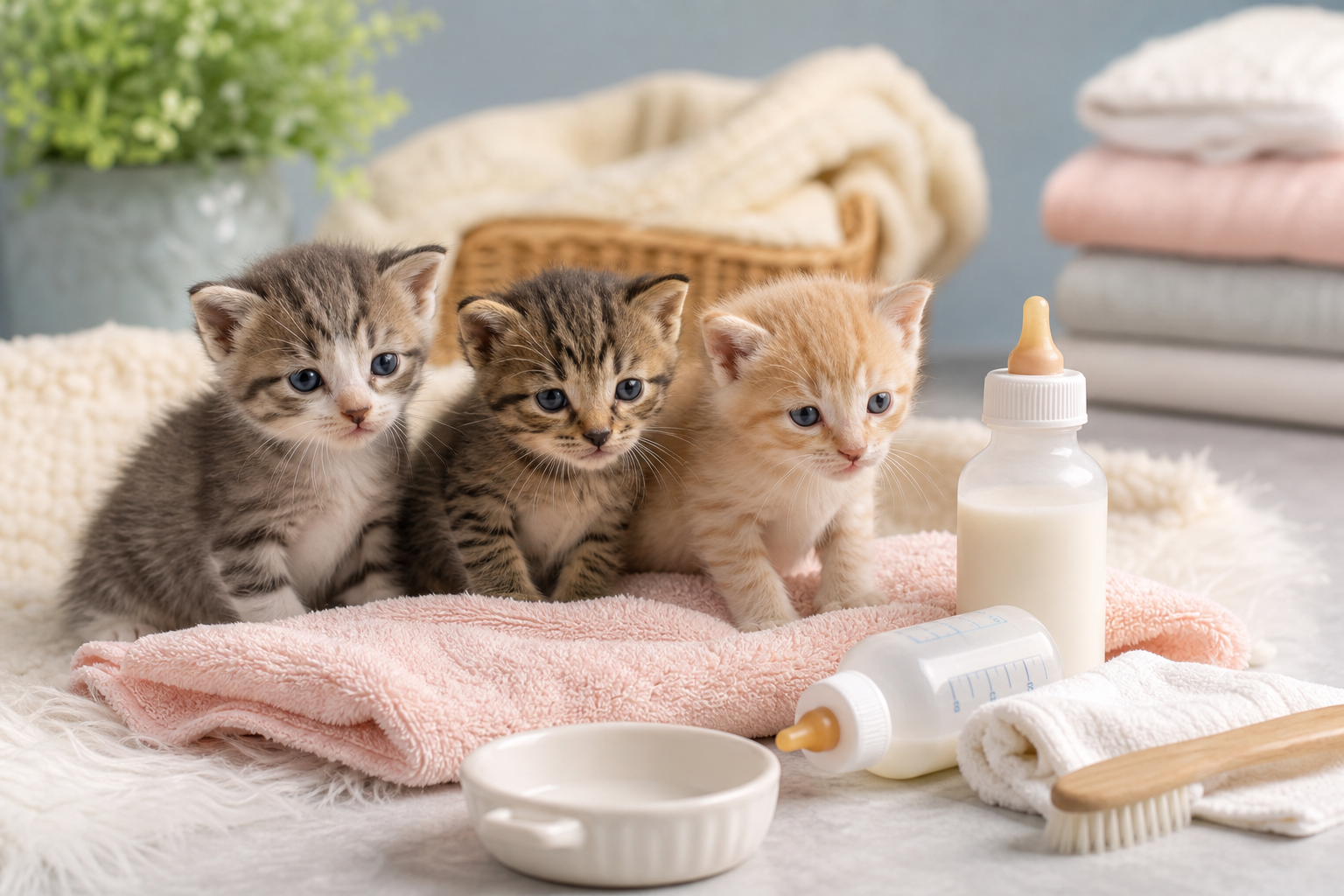
Proper positioning is critical to prevent aspiration — a life-threatening complication where formula enters the lungs rather than the stomach. Never feed a kitten on its back like a human infant. Instead, place the kitten belly-down on a folded towel, supporting its body so its head is level and its neck gently extended — but not tilted too far back. Hold the bottle at roughly a 45-degree angle and let the kitten latch and suckle at its own pace.
The nipple hole should allow only a slow drip of formula when the bottle is inverted. If formula flows too freely, it can overwhelm a kitten and cause it to inhale liquid into its lungs. After each feeding, gently pat the kitten’s back to encourage a small burp, then wipe its face clean with a damp cloth.
Stimulating Elimination
Kittens under three to four weeks old cannot urinate or defecate on their own — their mother stimulates this reflex by grooming their undersides. As a caregiver, you must replicate this after every feeding. Using a warm, moist cotton ball or soft tissue, gently stroke the area between the kitten’s anus and genitals in small circular motions until elimination occurs — usually within 15–30 seconds.
Urine should be pale yellow; dark or orange urine can indicate dehydration. Normal stool at this age is yellowish and soft. Hard or absent stools suggest constipation; runny, green, or foul-smelling stools can point to infection or overfeeding. Both extremes need prompt veterinary attention.
Weaning: The Transition to Solid Food
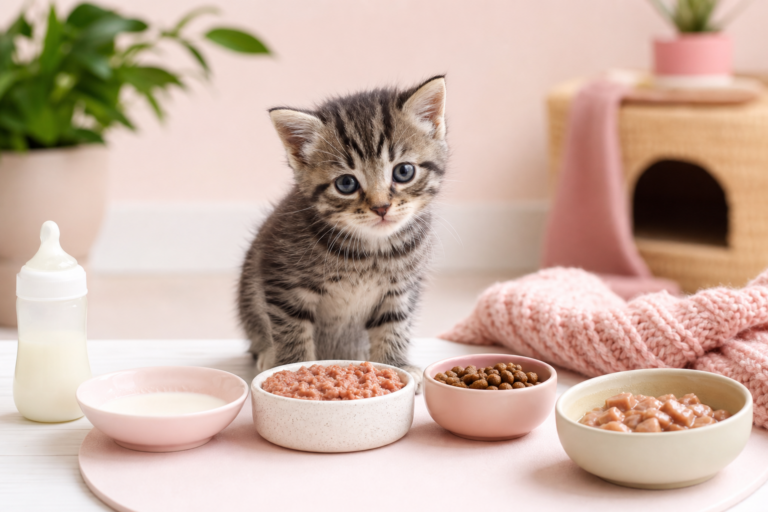
Around four weeks of age, kittens begin showing interest in solid food and the weaning process can begin. Start by offering a thin gruel — a warm mixture of kitten milk replacer blended with high-quality wet kitten food — in a shallow dish or on a spoon. Most kittens will wear it as much as eat it at first, but they learn quickly. Over the following two to three weeks, gradually increase the proportion of wet food while reducing the formula. By six to eight weeks, most kittens are fully weaned and eating independently. Introducing a small, shallow litter box with non-clumping clay litter at around three to four weeks supports the natural transition away from manual stimulation.
Warning Signs That Require Veterinary Care
Recognizing trouble early can be the difference between life and death for a neonatal kitten. Seek veterinary care promptly if you observe any of the following:
- Persistent crying despite being fed and kept warm
- Refusal to nurse for two or more consecutive feedings
- Formula or milk coming from the nose, which signals aspiration
- Labored, wheezy, or clicking breathing sounds
- A bloated, hard, or visibly distended abdomen
- Diarrhea lasting more than 24 hours
- Pale, blue, or grayish gums
- Extreme lethargy or inability to move normally
FAQ
Can I use human baby formula for a kitten in an emergency?
Human infant formula is not suitable for kittens, even as a short-term measure. It does not provide the protein profile or essential amino acids — particularly taurine — that cats need, and it can cause digestive upset and serious nutritional deficiencies rapidly. If you cannot access kitten milk replacer immediately, contact a local veterinary clinic or animal rescue organization for guidance on the safest bridge option until proper formula is available.
How do I know if a kitten is getting enough milk?
The two most reliable indicators are daily weight gain and post-feeding behavior. A well-fed kitten gains 10–15 grams per day and sleeps contentedly after nursing. A hungry or underfed kitten will cry persistently, appear restless, and fail to gain weight. Weigh kittens at the same time each day — ideally before the first morning feeding — on a kitchen scale that reads in grams for the most accuracy.
When is a bottle-raised kitten ready for adoption?
Orphaned kittens benefit greatly from remaining together as a litter and benefit from being socialized with humans during the critical window between two and seven weeks of age. They are generally ready for adoption at eight weeks old, once they are fully weaned, eating independently, using a litter box reliably, and have received their first vaccinations. A veterinary health check before placement in a new home is strongly recommended.
Why is my kitten crying even after I’ve fed it?
Persistent crying after feeding can have several causes: the kitten may not be warm enough, may need stimulation to eliminate, may be uncomfortable with trapped gas, or may have taken in too little (or too much) formula. Run through the basics — check the nest temperature, gently burp the kitten, and stimulate elimination. If crying continues for more than an hour and the kitten seems unresponsive to comfort, contact a veterinarian, as this can be a sign of pain or illness.
Sources
- vcahospitals.com
- bestfriends.org
- petmd.com
- kittenalliance.org
- upco.com
- heartbeetkitchen.com
- snapcats.org