What to Feed a Kitten: A Complete Feeding Guide by Age
Getting a kitten’s diet right from day one isn’t just about keeping a tiny belly full — it’s about laying the foundation for a long, healthy life. What a kitten eats, and how often, shifts dramatically across the first twelve months, and matching food to the developmental stage makes all the difference.
Why Kitten Nutrition Is Different from Adult Cat Food
Kittens aren’t simply small cats. During their first year, they’re growing at a pace that demands roughly twice the caloric energy per pound of body weight compared to adult cats. Their developing muscles, bones, eyes, and brains all need specific nutrients in concentrations that standard adult formulas simply can’t deliver. Always look for food labelled specifically for kittens — or for “all life stages” — and check that the packaging carries an AAFCO (Association of American Feed Control Officials) nutritional adequacy statement confirming the food meets growth requirements.
The key nutrients every growing kitten needs in generous supply include:
- High-quality animal protein — kittens are obligate carnivores whose bodies run on meat-derived amino acids
- Taurine — an essential amino acid cats cannot produce on their own, critical for healthy eyesight, heart function, and reproduction
- DHA and EPA (omega-3 fatty acids) — support brain and vision development, especially in the early weeks
- Calcium and phosphorus — in the correct ratio to support growing bones and teeth
- Vitamins E and C — to bolster a developing immune system
Newborn to 4 Weeks: Milk Is Everything
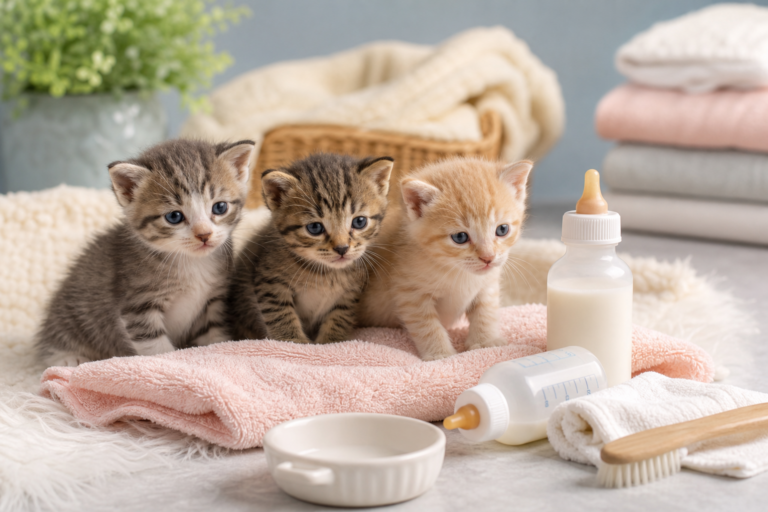
For the first month of life, a kitten’s entire diet should be mother’s milk. It delivers perfectly balanced nutrition along with vital antibodies that help protect newborns while their immune systems are still forming. Very young kittens — particularly those under two weeks old — need feeding every two hours around the clock, gradually stretching to every three to four hours as they approach the four-week mark.
If a kitten is orphaned or rejected, a commercial kitten milk replacer (KMR) is the appropriate substitute. Cow’s milk is not a safe alternative — it lacks the protein and fat profile kittens require and commonly causes digestive upset. Bottle-fed kittens generally need around two tablespoons of formula per four ounces of body weight each day, divided across frequent feeds.
3 to 8 Weeks: The Weaning Window
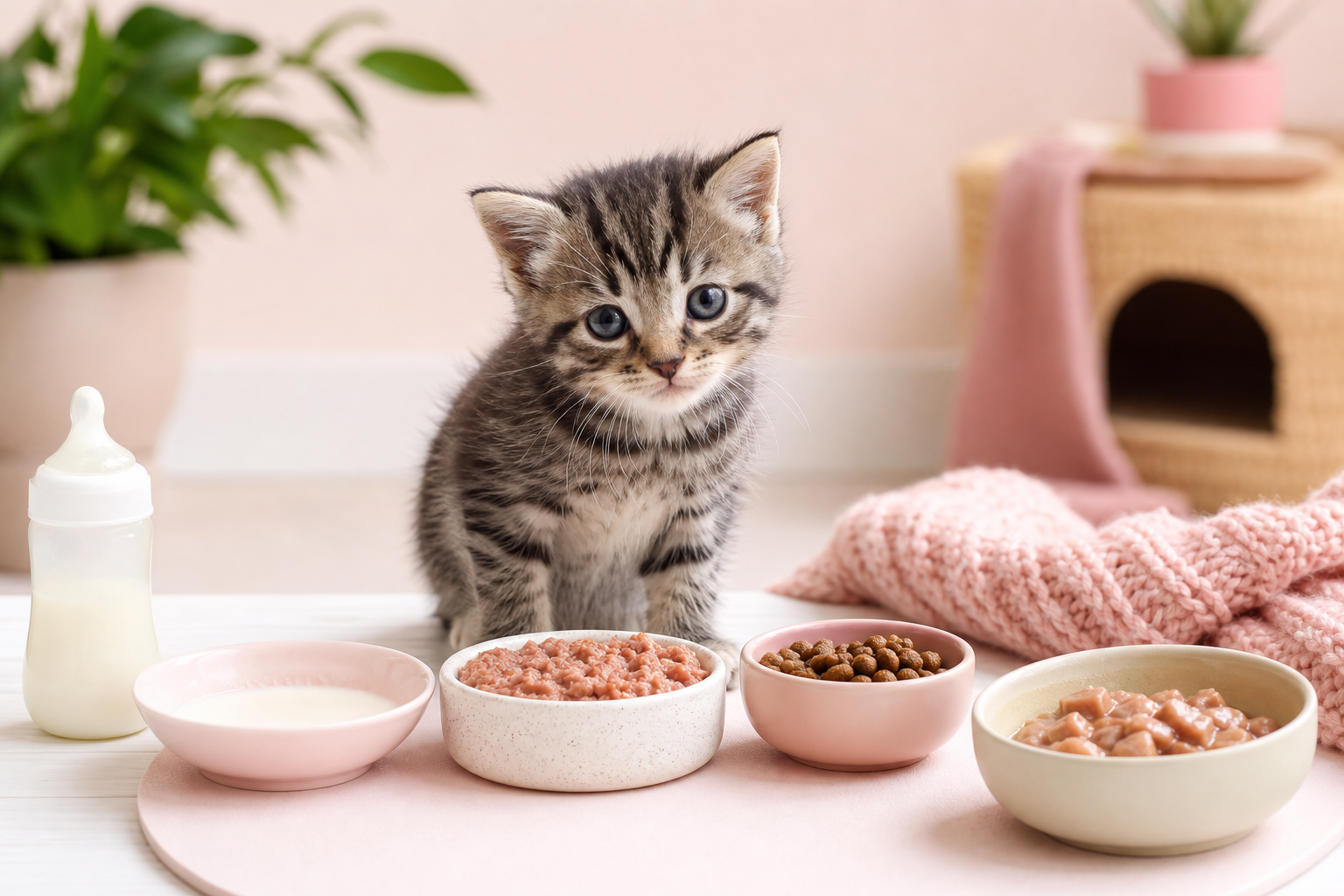
Around three to four weeks of age, kittens begin showing curiosity about solid food — often by nosing around their mother’s bowl. This marks the start of the weaning process. At this stage, introduce a gruel: high-quality wet kitten food blended with a small amount of warm water or kitten formula to a loose, lappable consistency. A shallow dish or spoon works better than a bottle at this point.
Over the following weeks, reduce the water content gradually until, by six to eight weeks, most kittens are happily eating moist food of normal texture four times a day. By eight weeks, the majority of healthy kittens are fully weaned and relying entirely on solid food and fresh water.
8 to 16 Weeks: Full Speed Ahead on Solid Food
The stretch from eight to sixteen weeks is one of the most nutritionally demanding periods a kitten will ever experience. Growth is rapid, energy requirements are sky-high, and small stomachs mean meals must be frequent. Aim for three to four meals per day during this window. Depending on breed and size, caloric needs can reach 250 to 360 calories daily.
Both wet and dry kitten food are appropriate at this stage, and many veterinarians suggest offering a combination of both. Wet food — which typically contains 70 to 80 percent moisture — supports hydration and is easier on young teeth. Dry kibble has far lower moisture content (around 6 to 10 percent) but keeps longer once opened and can help with dental health. If you offer wet food, remove uneaten portions after about two hours to prevent bacterial growth.
4 to 6 Months: Steady Growth, Big Appetite
By four months, kittens are still in a rapid growth phase and caloric needs remain substantial — roughly 60 to 65 calories per pound of body weight each day. A kitten weighing around 4.5 pounds at this age may need approximately 300 calories daily, while a 6.5-pound kitten approaching six months might require close to 400 calories. Three meals per day works well at this stage, keeping energy levels steady throughout the day.
This is also a good window to gently introduce variety in textures and protein sources if you haven’t already. Exposing kittens to a range of flavours while they’re young can help prevent fussiness later in life — just avoid making sudden switches that could upset their digestive system.
6 to 12 Months: Slowing Down, But Not Done Yet
Growth slows noticeably after the six-month mark, but kittens are still developing and still need a kitten-formulated diet. It’s a common mistake to switch to adult food at this point because a kitten looks nearly full-grown — but nutritionally, they’re not there yet. Continue feeding a quality kitten food through the full first year.
Feeding frequency can comfortably drop to two or three meals per day. Keep a close eye on body condition: a healthy kitten should have a gently visible waist when viewed from above, and ribs that are easy to feel without pressing firmly.
One important consideration for spayed or neutered kittens: sterilisation — typically performed around five to six months — can reduce energy requirements by as much as 30 percent while simultaneously increasing appetite by up to 26 percent. Portion control becomes more important after the procedure to help avoid unwanted weight gain.
12 Months and Beyond: Transitioning to Adult Food
At around twelve months, most cats are ready to move to an adult maintenance formula. Don’t make the switch overnight — a gradual transition over seven to ten days, blending increasing amounts of adult food into the kitten food each day, helps avoid digestive upset. Large or slow-maturing breeds such as Maine Coons may benefit from staying on kitten food a little longer; your vet is the best person to advise on timing for your specific cat.
Treats and Table Scraps: Keep Them in Check
Treats are fine in moderation, but they should account for no more than five to ten percent of a kitten’s total daily caloric intake so they don’t displace the balanced nutrition their main food provides. Human foods and table scraps are best avoided entirely — many common household ingredients including onions, garlic, grapes, raisins, and anything containing the sweetener xylitol are toxic to cats. Even seemingly harmless “safe” foods can encourage begging and disrupt healthy eating habits.
FAQ
Can I give my kitten adult cat food in an emergency?
A single meal of adult cat food won’t harm a kitten, but adult formulas don’t contain the elevated levels of protein, fat, and specific nutrients that a growing kitten needs. Relying on adult food for extended periods during the first year can lead to nutritional deficiencies. Switch back to kitten food as soon as possible and consult your vet if you have concerns.
How do I know if my kitten is eating enough?
The most reliable sign is consistent, healthy weight gain — kittens typically gain around 100 grams (roughly a quarter of a pound) per week during their first several months. If weight gain stalls, the kitten seems lethargic, or the coat looks dull or rough, it’s time to speak with a vet. Doing a simple at-home body condition check — feeling for ribs without pressing hard — is also a useful habit to build.
Is wet food or dry food better for kittens?
Both have genuine advantages. Wet food provides hydration alongside nutrition and is usually easier for young kittens to chew, while dry kibble is more convenient, stays fresh longer, and can support dental health. Many vets recommend offering a mix of both. Check in with your veterinarian to find the balance that works best for your individual kitten’s needs and lifestyle.
When should I introduce water to my kitten?
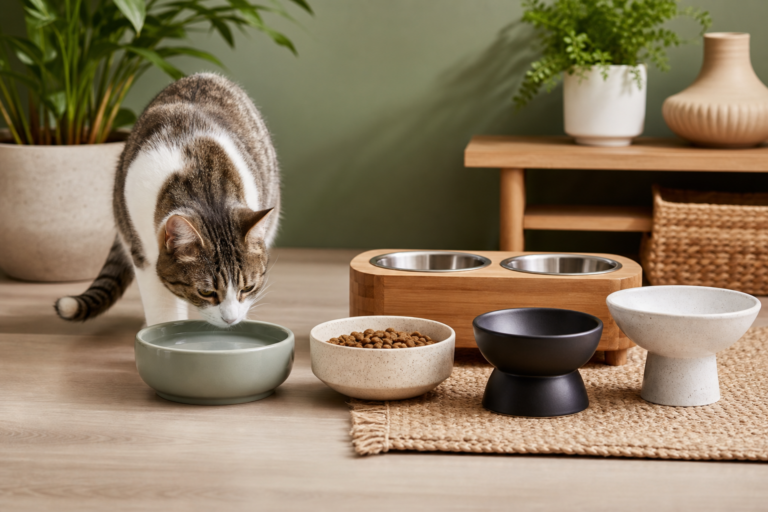
Fresh, clean water should be available from the moment a kitten starts eating any solid food — typically around three to four weeks of age. Even kittens eating wet food need access to water. A shallow, wide bowl is much easier for small kittens to drink from than a deep or narrow one, and keeping it away from the food bowl can encourage more drinking.
Sources
Related Articles