
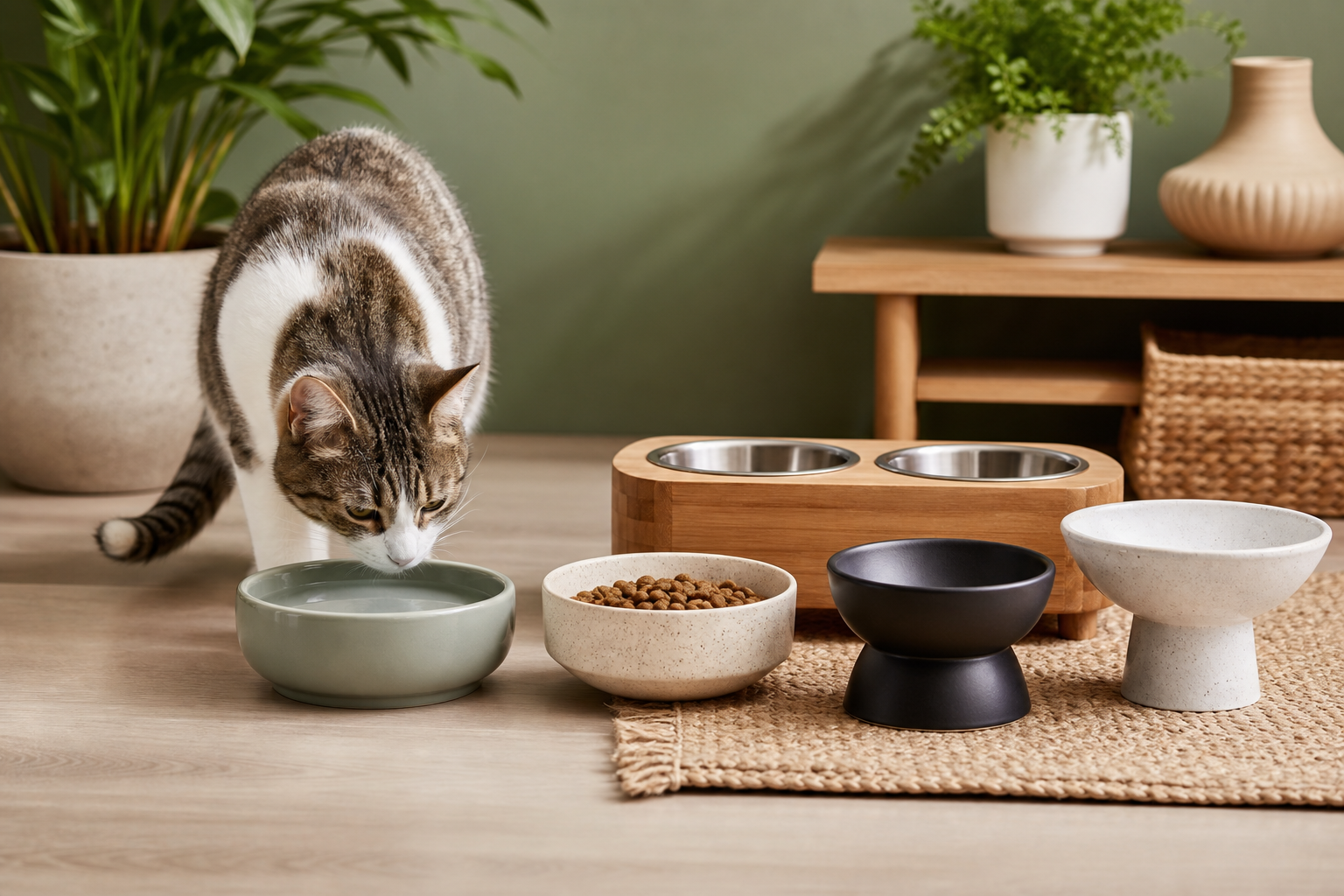
Cat Food and Water Bowls: Materials, Shapes, and Setup That Actually Work
Choosing a bowl for your cat might look like a trivial errand — grab something from the shelf, fill it up. But the material, shape, depth, and even placement of a food or water bowl can meaningfully affect your cat’s comfort, daily water intake, and long-term health. Getting the basics right takes only a few minutes of thought, and your cat will benefit every single day.
Why Bowl Choice Matters More Than You Think
Cats are notoriously particular animals, and their feeding setup can subtly influence behavior in ways owners may not immediately connect. A bowl that harbors bacteria can trigger feline acne — a skin condition producing blackheads and lesions on the chin. A bowl that is too deep or too narrow can make mealtime genuinely uncomfortable. And water placement that cuts against a cat’s natural instincts may mean your pet drinks far less than it should, quietly increasing the risk of urinary tract disease and chronic kidney disease, two of the most common health conditions seen in domestic cats.
The Material Question: Stainless Steel, Ceramic, or Plastic?
Stainless Steel
Food-grade stainless steel — typically labeled 18/8 or 18/10, referring to its chromium and nickel content — is widely regarded as the safest choice by veterinary professionals. Its non-porous, smooth surface resists scratching, doesn’t crack, and can be thoroughly sanitized in a dishwasher. Bacteria have nowhere to hide. When shopping, look for bowls explicitly described as food-grade to avoid cheaper variants sometimes made from recycled metals, which may carry contamination risks.
Ceramic
A good-quality, food-safe ceramic bowl has genuine appeal: it is heavy enough to stay in place during enthusiastic eating, stays cooler than metal in warm rooms, and many cats seem to prefer its texture. The caveats are important, though. Some ceramic glazes — particularly from unregulated manufacturers — can contain lead, which is harmful if it leaches into food over time. Any ceramic bowl that becomes chipped or cracked should be retired immediately, as damaged surfaces can harbor bacteria just as plastic does.
Plastic — Use With Caution
Plastic bowls remain the most common type in use, but they come with well-documented drawbacks. The material develops tiny scratches and micro-cracks even with careful hand-washing, creating persistent breeding grounds for bacteria. Some plastics also contain chemicals such as BPA (Bisphenol A) and phthalates, which the National Institutes of Health has linked to organ damage in animal studies. Perhaps most visibly, bacteria harbored in plastic bowls are a frequent culprit behind feline chin acne, a condition sometimes mistaken for a skin disease. Switching to stainless steel or ceramic is a low-cost, straightforward upgrade that most vets recommend.
Bowl Shape, Depth, and the Whisker Fatigue Question
You may have spotted the phrase whisker fatigue on pet product packaging. The concept holds that a cat’s whiskers — technically called vibrissae — are exquisitely sensitive sensory organs packed with nerve endings. When these whiskers repeatedly brush against the sides of a deep, narrow bowl during every meal, the theory goes, the barrage of sensory signals creates stress, causing cats to pace around their bowls, paw food onto the floor, or appear hungry yet reluctant to eat.
The idea is biologically plausible given what we know about feline whisker anatomy, but it remains scientifically contested. A 2020 study that compared cats eating from standard bowls versus wide, whisker-friendly designs found no statistically significant difference in eating time, food consumption, or food-dropping behavior. Veterinary opinion is genuinely split: some practitioners observe real improvement when clients switch to shallower dishes, while others note that the behaviors attributed to whisker fatigue can equally signal dental pain, gastrointestinal issues, or other medical concerns. If your cat is eating reluctantly, a vet check should always come first.
That said, offering a wide, shallow dish costs very little and does no harm. Bowls around five to six inches in diameter and no more than an inch or two deep allow cats to eat without whisker contact — a reasonable choice regardless of whether whisker fatigue is a real driver of discomfort for your individual cat.
Water Bowls vs. Drinking Fountains
Cats descended from desert-adapted ancestors, and their thirst drive is naturally lower than that of dogs. This biological quirk means many cats can walk past a full water bowl without pausing to drink. Chronic low-level dehydration quietly stresses the kidneys and urinary tract over months and years, so encouraging more drinking is a genuine health priority for cat owners.
Wild felines instinctively favor moving water over still pools, associating motion with freshness. Pet drinking fountains capitalize on this preference by circulating water continuously, often passing it through a filter. Anecdotally, many cat owners report their cats drink more after switching to a fountain, and veterinarians broadly support anything that increases water intake. However, it is worth being honest: formal research directly confirming that fountains produce a meaningful increase in daily water consumption in domestic cats remains limited, and results vary considerably between individuals.
Standard water bowls are not without merit. They are simple, inexpensive, easy to clean thoroughly, and travel-friendly. The essential rule, whichever you choose, is freshness — still water should be changed at least once or twice daily. Fountains require weekly disassembly and scrubbing, plus regular filter replacement, to prevent biofilm — an invisible bacterial layer — from building up and actually making the water less hygienic than a well-maintained bowl. For water vessels, the same material logic applies: stainless steel and ceramic outperform plastic on hygiene, and the bowl or fountain basin should be wide enough that whiskers do not brush against the rim while your cat drinks.
Should You Use an Elevated Bowl?
Elevated cat bowls — raised a few inches off the floor on a stand — have been marketed as aids for digestion, posture, and reduced regurgitation. The honest veterinary picture is measured: there is no strong scientific evidence that raised bowls benefit healthy, mobile cats. Wild cats eat at ground level without apparent difficulty, and research confirming a universal digestive advantage from elevation simply does not exist yet.
The meaningful exception is senior cats or those with arthritis and joint pain. For these animals, a slightly raised bowl can reduce strain on the neck and spine during meals, making eating genuinely more comfortable. If your cat is aging or has been diagnosed with a musculoskeletal condition, it is worth discussing bowl height with your veterinarian. For younger, healthy cats, feeding at floor level remains perfectly appropriate.
Where You Place Bowls Makes a Difference
Location is often overlooked but can have a real impact on eating and drinking behavior. A few practical, evidence-informed tips:
- Separate food and water. In the wild, cats avoid drinking near prey remains, associating nearby water with contamination. Many domestic cats retain this instinct. Research suggests cats drink more when water is placed several feet from their food — in a different corner of the room or even a different room entirely.
- Keep bowls away from the litter box. Cats are fastidious and will avoid eating or drinking near where they eliminate. Even if the litter box is tidy, proximity is enough to suppress appetite and water intake.
- Choose quiet spots. High-traffic, noisy locations cause stress that can reduce both eating and drinking. A calm corner where your cat does not feel exposed is far more inviting.
- In multi-cat households, multiply your stations. Even subtle resource competition can push some cats to eat too quickly or avoid their bowls entirely. A commonly cited guideline is one feeding station per cat, plus one spare.
FAQ
How often should I wash my cat’s food and water bowls?
Food bowls should ideally be washed after every meal with hot water and dish soap. Bacteria can begin colonizing surfaces quickly once food residue is present. Water bowls should be emptied, rinsed, and refilled at least once daily — even when the water looks clear, an invisible biofilm can develop within hours. Stainless steel and ceramic bowls are both dishwasher-safe, making daily cleaning simple.
My cat paws food onto the floor before eating — is this whisker fatigue?
It might be, but don’t assume so. This behavior is also associated with dental pain, food texture preferences, gastrointestinal discomfort, or simple play instinct. Try switching to a wide, shallow dish and monitor for improvement over a few weeks. If the behavior persists or is accompanied by other changes such as weight loss, drooling, or reduced energy, have your vet assess your cat for an underlying medical cause before attributing it to bowl shape.
Is glass a good material for cat bowls?
Glass is genuinely hygienic — non-porous, easy to sterilize, and free from the chemical concerns associated with plastic. The obvious limitation is fragility. Cats that push bowls enthusiastically or that eat on elevated surfaces can knock glass dishes onto hard floors, creating a hazard. If you choose glass, look for thick, heavy-bottomed designs with non-slip bases, and keep them at floor level to reduce the risk of breakage.
Do I really need a cat water fountain?
Not necessarily, but it is worth trying if your cat seems indifferent to water. Fountains provide circulating, aerated water that many cats find more appealing than a still bowl, and encouraging greater water intake is genuinely beneficial for kidney and urinary health. If your cat drinks willingly from a frequently refreshed bowl, that may be sufficient. The most important factors are always freshness, cleanliness, and placing the vessel somewhere your cat feels safe. A fountain is a useful tool — not a universal requirement.
Sources
- petmd.com
- americatcompany.com
- thevetdesk.com
- catster.com
- purina.com
- cats.com
- news.okstate.edu
- catit.com