How Often Should You Feed Your Cat? A Practical Feeding Guide
Few daily rituals matter more to your cat’s health than the simple act of filling the bowl. Yet feeding frequency, portion size, and food type trip up even devoted owners. This guide pulls together the consensus from feline veterinary sources so you can build a feeding routine that keeps your cat lean, hydrated, and content.
Feeding Frequency by Life Stage
How often your cat eats should change as it grows. Cats are natural grazers that, left to their own devices, would hunt and eat many small meals across the day, so spreading food into scheduled portions usually suits them well.
Kittens
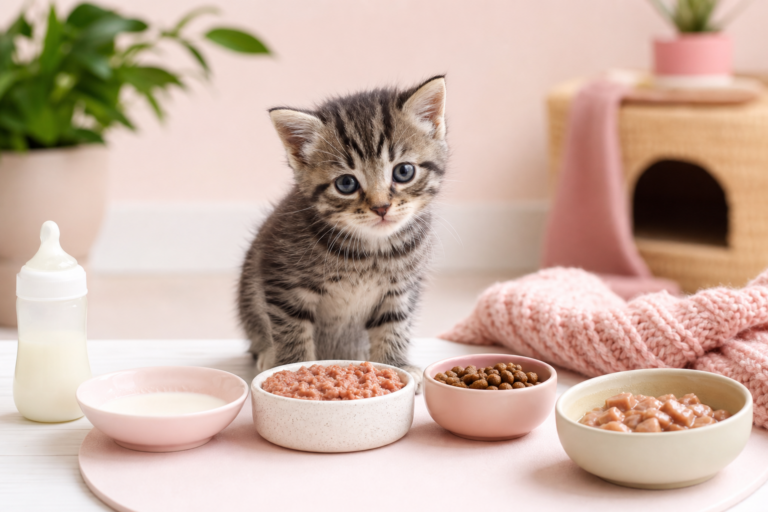
Kittens have small stomachs and high energy needs, so they eat little and often. Until about six months of age, most kittens do best on roughly three to four meals a day of an energy-dense kitten food. Between six months and one year, you can usually move to twice-daily feeding. Controlled, steady growth in kittenhood helps set up a healthy adult body condition, so resist the urge to overfeed a fast-growing youngster.
Adult cats
For most adult cats (around one year and older), feeding once or twice a day is appropriate, and at least two meals is the common recommendation. A cat’s stomach empties in roughly 8 to 12 hours, after which hunger signals kick in, so spacing two meals across that window keeps your cat comfortable. Splitting the daily ration into smaller, more frequent meals is also fine and can mirror a cat’s natural eating pattern.
Senior cats
Senior cats (often defined as seven and older, and certainly by ten-plus) can generally stay on the same schedule as adults unless your veterinarian advises otherwise. What often changes is the food itself and the portion: older cats may need a more digestible, protein-rich diet to support aging muscles, and their calorie needs can shift in either direction depending on activity, dental health, and underlying conditions. Regular vet checks become especially valuable here.
How Much to Feed: Portions and Body Condition
The feeding guide printed on a food package is a starting point, not a prescription. It is calculated for an average cat, and your cat’s true needs depend on age, neuter status, activity level, and metabolism. Neutered cats, for example, typically need fewer calories and gain weight easily.
The most reliable way to judge whether you have the portion right is your cat’s body condition score (BCS), a hands-on assessment vets use in place of the scale alone. On the common 9-point scale, a score of 5 out of 9 is ideal. To check at home:
- Feel the ribs. In an ideal cat, you can feel the ribs easily with light pressure, with just a thin layer of fat over them. If you have to press hard to find them, your cat is carrying too much fat.
- Look from above. You should see a visible waist that tucks in behind the rib cage, giving a gentle hourglass shape.
- Look from the side. The belly should tuck up slightly rather than sag or bulge.
Weigh and assess your cat periodically and adjust portions up or down based on what you feel, not just what the bag says. This matters: feline obesity is common, and overweight cats are roughly four times more likely to develop diabetes, on top of raised risks for arthritis, heart disease, and a shorter lifespan.
Wet Food, Dry Food, or Both?
Both wet and dry foods can meet a cat’s needs when they are complete and balanced, and many owners feed a combination. The biggest practical difference is moisture. Canned or pouch food is roughly 75 to 80 percent water, while dry kibble sits closer to 8 to 10 percent.
- Wet food boosts daily water intake, which is helpful for cats prone to urinary problems and for naturally low drinkers. It is also softer for cats with dental issues and often more tempting for picky eaters.
- Dry food is convenient, can be left out without spoiling, and works well in puzzle feeders that turn mealtime into enrichment and slow down fast eaters.
If your cat eats only dry food, pay extra attention to water access. There is no single best answer for every cat, so let your cat’s health, preferences, and your veterinarian’s input guide the choice.
Free-Feeding Versus Scheduled Meals
Free-feeding, leaving food out all day, suits some natural grazers, but it makes it hard to track how much your cat actually eats and is a leading cause of weight gain. It is generally not recommended for kittens, where it can encourage overeating and obesity. Measured, scheduled meals give you several advantages: you control portions, you notice quickly if your cat’s appetite drops (often an early sign of illness), and you can manage medical conditions like diabetes more precisely. If you do leave dry food out for a grazer, measure the day’s full ration into the bowl rather than topping it up endlessly.
Don’t Forget Fresh Water
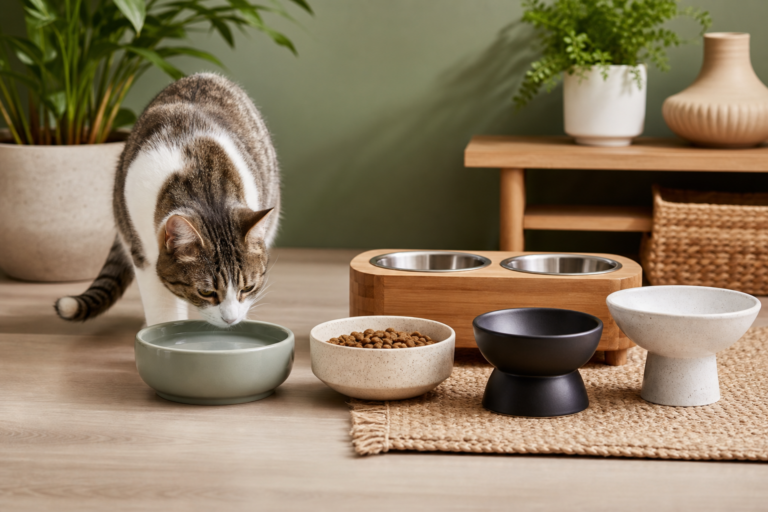
Water is the most important nutrient of all, and cats should have constant access to clean, fresh water. Refresh it at least once a day and wash the bowl regularly. Many cats prefer their water away from their food and dislike bowls that sit beside the litter box. If your cat is a reluctant drinker, a wider bowl, a separate water station, or a pet fountain can encourage more drinking, which is especially worthwhile for cats on a dry-food diet or with a history of urinary issues.
Common Feeding Mistakes to Avoid
- Free-pouring kibble. Eyeballing portions almost always leads to overfeeding. Use a measuring cup or kitchen scale.
- Too many treats. Treats should make up no more than about 5 percent of daily calories; the rest should come from a complete, balanced diet.
- Offering cow’s milk. Most adult cats are lactose intolerant, and milk commonly causes stomach upset and diarrhea.
- Ignoring body condition. Sticking rigidly to the package amount while your cat slowly gains weight is one of the most common pitfalls.
- Sudden diet switches. Change foods gradually over several days to avoid digestive upset and food refusal.
Frequently Asked Questions
Is it okay to feed my adult cat just once a day?
Some cats do fine on a single daily meal, but at least two meals is the standard recommendation because a cat’s stomach empties in about 8 to 12 hours. Two or more smaller meals tend to keep cats more comfortable and closer to their natural eat-little-and-often pattern. If you are unsure what suits your individual cat, ask your veterinarian.
How do I know if I’m feeding too much?
Check your cat’s body condition rather than relying only on the bowl. You should be able to feel the ribs easily with light pressure and see a waist when looking from above. If the ribs are hard to find or the waist disappears, cut portions back gradually and have your vet confirm a healthy target weight.
Should I switch to wet food for better hydration?
Wet food’s high moisture content does help cats take in more water, which can benefit cats prone to urinary problems or those who rarely drink. You don’t have to feed wet food exclusively, though; combining wet and dry, or simply ensuring excellent fresh-water access, can also work well. Discuss the right balance with your veterinarian, especially if your cat has a medical condition.
Can I leave dry food out all day for my cat?
You can, since dry food doesn’t spoil quickly, and grazers may prefer it. The risk is overeating and weight gain, and it makes appetite changes harder to spot. If you free-feed, measure the entire daily ration into the bowl instead of refilling it, and weigh your cat regularly to catch creeping weight gain early.
This article offers general guidance only and isn’t a substitute for individualized veterinary advice. Your veterinarian can recommend the right food, portions, and schedule for your cat’s age, weight, and health.
Sources
Related Articles