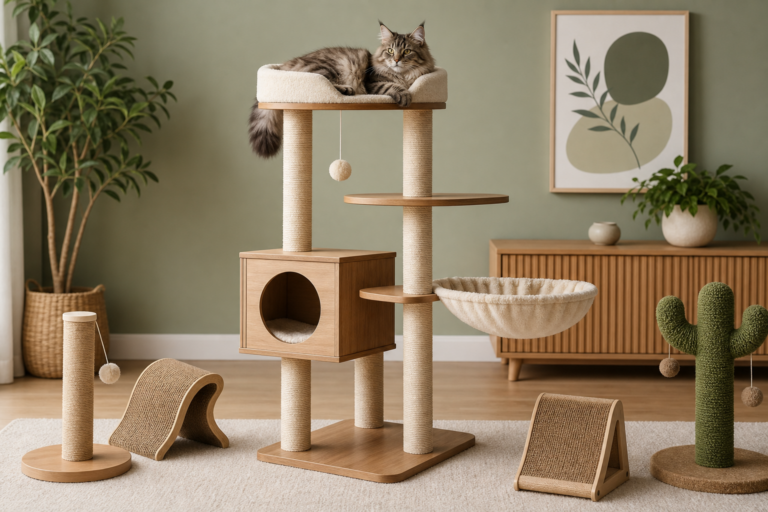
Cat Beds and Resting Spots: How to Choose the Right One for Your Feline
Your cat is, statistically, one of the world’s most enthusiastic sleepers — and that makes choosing the right resting spot far more than an aesthetic decision. Whether you’re a first-time cat owner or simply trying to coax a finicky feline away from your laptop keyboard, understanding what cats genuinely need from a bed can make a meaningful difference in their daily comfort and wellbeing.
Why Cat Beds Matter More Than You Think
Cats sleep anywhere from 12 to 20 hours every day, with most adults averaging around 15 hours. Unlike humans, who consolidate sleep into one long stretch, cats are built for fragmented rest — taking dozens of short naps throughout the day and night. This pattern is deeply rooted in their evolutionary history: wild cats needed to hunt as many as 20 small prey animals each day, demanding intense bursts of energy followed by recovery sleep. Even the most pampered indoor cat runs on the same ancient schedule.
Because cats are also crepuscular — most naturally active around dawn and dusk — the quality and placement of their resting spots influences how rested and regulated they feel at any given moment. A well-chosen bed doesn’t just give your cat somewhere soft to curl up; it provides a sense of personal territory, thermal comfort, and psychological security that supports their overall health.
Reading Your Cat’s Sleeping Style
Before choosing a bed, spend a few days observing how your cat actually sleeps. The position reveals a great deal about what they need:
- Curled tight in a ball: Your cat is conserving body heat and protecting vulnerable areas. This cat will appreciate a deep, round bed with raised edges — often called a donut or bolster bed — that cradles and encloses them snugly.
- Stretched out flat: A relaxed, confident cat who enjoys sprawling. A wide lounger bed or flat mat with room to extend all four limbs is the natural fit.
- The “loaf” (paws tucked under, upright): Your cat is resting but staying alert. Any medium-sized bed works well here; they’re less fussy about shape but often want a good sightline.
- Tucked into corners or under furniture: This cat craves enclosure and privacy. A cave or igloo-style bed — enclosed with a small opening — will feel far more inviting than an open cushion left in the middle of a room.
Matching the bed shape to the sleeping style is one of the most reliable ways to ensure your cat actually uses it, rather than ignoring it entirely in favor of the laundry pile.
The Main Types of Cat Beds
Donut and Bolster Beds
These beds feature a raised, padded rim that acts as a headrest and creates a cozy interior hollow. The raised edges provide a sense of security — particularly for anxious or shy cats — and support the neck for cats who like to drape a limb over the side. Bolster beds work well for the majority of sleeping positions and personalities, making them a versatile first choice.
Cave and Igloo Beds
Fully or partially enclosed, cave beds offer warmth and privacy in equal measure. They suit nervous cats, cats in busy multi-pet households, or simply those that instinctively seek out box-like hiding spots. Some designs include a removable hood, giving the cat the option to use the bed open or enclosed depending on their mood.
Flat Mats and Kennel Pads
Simple cushions without raised sides, flat mats are ideal for confident cats who prefer an unobstructed surface. They’re also the most portable option — easy to lay on a shelf, window ledge, or cat tree platform — and straightforward to wash. If your cat currently sleeps on a folded blanket on the sofa, a flat mat in that same spot is often a seamless upgrade they’ll accept readily.
Lounger Beds
Larger and more generously padded, lounger beds cater to cats who like to fully stretch out. Many feature a slight bolster on one side only, allowing the cat to lean without being fully enclosed. These suit large breeds or sociable cats who enjoy sprawling in communal spaces where household activity is visible.
Orthopedic and Memory Foam Beds
Designed with supportive foam that distributes body weight evenly and reduces pressure on joints, orthopedic beds are particularly valuable for senior cats, overweight cats, and any cat with arthritis or mobility issues. As cats age, they lose muscle mass and spend more time resting — so the surface beneath them matters considerably more than when they were young and limber. Low-sided or ramped designs make access easier for cats who can no longer leap comfortably onto elevated surfaces.
Heated and Self-Warming Beds
Cats are drawn to warmth by instinct — which explains why your cat gravitates toward sunny patches on the floor or the top of a warm appliance. Heated beds come in two main forms: electrically heated pads (which typically use thermostatic controls to reach just above body temperature) and self-warming beds (which use reflective or insulating materials to retain the cat’s own body heat without electricity). Both benefit cats in cooler homes. For senior cats with arthritis, gentle consistent warmth supports circulation to affected joints and can meaningfully reduce morning stiffness.
Where to Place a Cat Bed
Even the most thoughtfully chosen bed will go unused if placed in the wrong spot. Cats do not compromise on location.
- Start where your cat already naps. The single most effective placement strategy is to put the bed exactly where you’ve already observed your cat resting. They’ve already vetted that spot for warmth, safety, and quiet — your job is to upgrade the surface beneath them.
- Choose elevated spots when possible. Height gives cats a vantage point from which to monitor their environment, which is a fundamental source of security for a species that is simultaneously predator and prey. A bed on a cat tree platform, a sturdy bookshelf, or a sunny windowsill satisfies this instinct well.
- Prioritize quiet, low-traffic areas. A bed positioned in a busy hallway or near a frequently slammed door will rarely be used. Bedrooms, quiet home offices, or calm corners of less-trafficked rooms tend to work best.
- Consider proximity to you. Many cats prefer to rest near their owners. Placing a bed on the arm of a sofa, beside your desk, or at the foot of your bed acknowledges that social dimension without forcing it.
- Avoid drafts, direct heating vents, and damp areas. Temperature consistency matters. A bed placed in a cold corner or in the direct path of an air vent will be abandoned quickly.
In multi-cat households, providing at least one bed per cat — ideally in different rooms or at different heights — reduces competition and the low-level social stress that can accumulate when cats must negotiate access to the best resting spots.
Keeping Beds Clean and Appealing
Whatever bed you choose, regular washing is essential. Cat beds accumulate dander, loose fur, and natural oils that can eventually put sensitive cats off using them. Most fabric beds and removable covers are machine-washable; a gentle cycle is usually sufficient. Avoid strongly scented detergents — cats have an acute sense of smell and may reject a bed that no longer carries their own familiar scent. If your cat is particularly resistant to a new or recently washed bed, placing a worn T-shirt or a small item carrying your scent inside it can ease the transition considerably.
FAQ
How many beds does my cat need?
There’s no strict rule, but most cats benefit from two to three resting spots distributed around the home — ideally at least one elevated and one at floor level. This allows them to choose based on mood, temperature, and activity level in the house. In multi-cat homes, having at least one bed per cat (plus one spare) helps prevent territorial friction over prime resting spots.
Why does my cat ignore the bed I bought?
The most common culprits are placement (the cat doesn’t feel safe or comfortable in that location), shape (the bed style doesn’t match their preferred sleeping position), or scent (new materials and packaging smells can be off-putting). Try moving the bed to where your cat already naps, adding a familiar-smelling blanket, or sprinkling a small amount of dried catnip on the surface to attract initial interest.
Do cats genuinely benefit from dedicated beds, or is it unnecessary?
While cats are adaptable and will sleep on almost any surface, a well-matched bed provides real benefits: thermal regulation, joint support (especially for older cats), a sense of personal territory, and reduced stress. Cats with a secure, consistent resting spot tend to be calmer and better rested than those perpetually competing for comfortable surfaces in a busy home.
What kind of bed is best for a senior cat?
Senior cats benefit most from orthopedic beds with memory foam or high-density foam to cushion aging joints, and from low-entry or gently ramped designs that don’t require jumping to access. A heated or self-warming option is also worth considering, as older cats often struggle to maintain body temperature and can experience arthritis pain that responds well to gentle, consistent warmth throughout the night.
Sources
- indoorpet.osu.edu
- petmd.com
- catster.com
- petmate.com
- kneadcats.com
- basepaws.com
- catsluvus.com
- lefelin.com
Related Articles