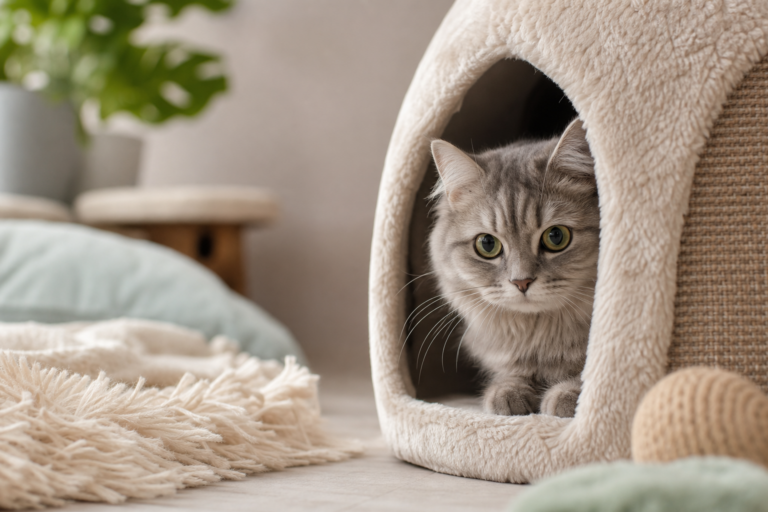
Caring for a Long-Haired Cat: How to Prevent Mats and Tangles
There is no denying the appeal of a long-haired cat — a flowing coat, a regal posture, and seemingly endless floof. But beneath all that beauty lies a grooming responsibility that many new owners underestimate. Without consistent care, a long-haired cat’s coat can develop painful mats and tangles that affect not just appearance, but genuine physical wellbeing.
Why Long-Haired Coats Are Prone to Matting
Matting happens when loose, shed hairs fail to fall away cleanly. Instead, they become entangled with healthy hairs and, combined with the natural oils on a cat’s skin, compress into dense, solid clumps. Once a mat begins to form, it tends to grow — drawing in more surrounding hair and pulling progressively closer to the skin. Tight mats can restrict movement, trap moisture, cause painful skin irritation, and even create sores if left unaddressed. Certain areas are especially vulnerable: behind the ears, under the armpits (the ‘armpit’ area near the front legs), along the belly, and at the base of the tail.
Different long-haired breeds have varying coat textures that affect how quickly mats develop. Persians, for example, have an exceptionally dense, fine undercoat that mats almost alarmingly fast without daily brushing. Maine Coons have a thick, semi-water-resistant double coat that benefits from grooming several times a week. Norwegian Forest Cats carry a similarly hearty double coat adapted to cold climates — and they undergo a dramatic twice-yearly shed that requires owners to intensify their grooming routine during those periods.
Building a Regular Grooming Routine
The single most effective mat-prevention strategy is simply consistency. Daily brushing keeps loose hair from accumulating, distributes the skin’s natural oils evenly along the coat, and gives you a chance to catch small tangles before they harden into full mats. Even ten minutes a day makes an enormous difference over time.
If your cat is new to grooming — or if past sessions have been stressful — start slowly. Keep early sessions brief and positive, pairing them with treats and gentle praise. Work in the direction of hair growth, and avoid tugging. Over time, most cats come to tolerate, or even enjoy, regular grooming when it is introduced calmly.
Choosing the Right Tools
Not all brushes are created equal, and using the wrong tool can make grooming uncomfortable or ineffective. For long-haired cats, a small collection of complementary tools works better than any single instrument.
- Slicker brush: A flat brush with fine, closely spaced wire pins. Excellent for everyday use — it lifts loose fur from the outer coat and smooths the surface layer.
- Wide-tooth metal comb: The workhorse of long-coat grooming. Run it through the coat after brushing to check for hidden tangles and to reach down into the undercoat where many mats begin.
- Dematting comb or mat splitter: Designed with angled or serrated blades to gently slice through knots rather than drag them out intact. Useful when you encounter minor matting during a routine session.
- Fine-tooth flea comb: Helpful for working through the sensitive areas around the face, behind the ears, and under the chin where regular combs may be too bulky.
Whatever tools you choose, make sure they are designed for cats — never repurpose dog grooming equipment, which is often too heavy or too stiff for a cat’s more delicate coat and skin.
How to Handle an Existing Mat
Even with the best routine, mats can appear — especially after an illness, a stressful period, or during a heavy seasonal shed. The key is not to panic, and never to reach straight for scissors.
For small, soft mats, begin by working a cat-safe detangling spray or a small amount of cornstarch into the mat to help loosen the fibres. Use your fingers to gently separate the edges of the mat first, always working from the outside inward — that is, from the tips of the hair toward the skin, not the other way around. Follow with a wide-tooth comb, using short strokes and keeping one hand pressed lightly against the skin just above the mat to prevent painful tugging.
If the mat is dense or sits very close to the skin, a dematting comb or electric pet clippers (never household scissors) are safer options. Scissors present a serious risk of cutting the skin, which can tent and fold along with the mat in ways that are difficult to see. If in any doubt about a mat’s size or location — particularly near the groin, armpits, or face — consult a professional groomer or veterinarian rather than attempting removal at home.
Bathing as Part of the Grooming Plan
Occasional bathing can be beneficial for long-haired cats, helping to remove built-up oils and debris that contribute to tangling. Most grooming professionals recommend bathing no more than once every four to six weeks, and always using a shampoo specifically formulated for cats — human shampoos have a different pH balance and can disrupt the skin’s natural barrier.
Crucially, always brush your cat thoroughly before a bath, not just after. Wetting a coat that already contains tangles causes those tangles to tighten significantly, turning a manageable knot into a stubborn mat. After bathing, dry the coat carefully — either by gently patting with a towel or using a low-heat pet dryer — and comb through the coat once fully dry.
Diet, Hydration, and Coat Health
Grooming tools are only part of the picture. A cat’s coat health is also a reflection of what is happening on the inside. A diet that includes adequate omega-3 and omega-6 fatty acids supports skin elasticity and produces a smoother, shinier coat that is naturally less prone to tangling. If your cat’s coat appears dry, brittle, or dull despite regular grooming, it may be worth discussing nutritional options with your vet.
Hydration matters too. A well-hydrated cat has more supple skin, which helps the coat lie flat and reduces the friction that leads to matting. Some cats are reluctant drinkers, so offering a cat water fountain or wet food alongside dry kibble can help maintain adequate fluid intake.
Older cats and those with arthritis or obesity may struggle to groom themselves effectively, particularly in hard-to-reach spots like the back and lower spine. In these cases, owners need to step in more frequently — and a veterinary check-up can determine whether the underlying health issue also needs to be addressed.
When to Call in a Professional
Professional groomers who specialise in cats are skilled at managing severe matting efficiently and with minimal stress to the animal. A ‘lion cut’ — where the body coat is clipped short while the face, paws, and tail tip are left fuller — is a common solution for cats whose coats have become extensively matted. While it may look dramatic, it is entirely safe and allows a fresh, healthy coat to grow back in.
Veterinary involvement is warranted when mats are very tight against the skin, when the skin beneath appears red or broken, or when a cat is in obvious discomfort. In some cases, light sedation is used to allow safe, thorough mat removal without causing the cat undue distress.
FAQ
How often should I brush my long-haired cat?
Daily brushing is the gold standard for most long-haired breeds, particularly Persians and Himalayans. For cats with coarser, more weather-resistant coats — like Maine Coons or Norwegian Forest Cats — thorough brushing three to four times a week may suffice outside of shedding seasons, but daily attention is still ideal during spring and autumn moults.
Can I use coconut oil or olive oil to loosen mats?
Small amounts of natural oils like coconut or olive oil are sometimes used to help soften mats before combing, and many owners find them helpful. However, use them sparingly — an overly oily coat can actually attract more dirt and loose hair, which worsens tangling. Cat-specific detangling sprays are generally a cleaner option for regular use.
Is it safe to cut out mats with scissors?
Cutting mats with scissors is strongly discouraged. A cat’s skin is loose and can fold invisibly into a mat, making it very easy to cause a serious laceration even when you believe you are cutting safely away from the body. Electric pet clippers, used carefully and at a low setting, are much safer — or leave it to a professional groomer.
At what age should I start grooming my kitten?
The earlier, the better. Introducing gentle brushing during kittenhood — even before the full adult coat develops — helps your cat associate grooming with calm, positive experiences. A kitten who learns that brushing is normal is far more likely to be a cooperative grooming partner as an adult.
Sources
- aspca.org
- cats.com
- cats.org.uk
- zoetispetcare.com
- petmd.com
- vth.vetmed.vt.edu
- westdelrayvet.com
- hiddenbrookveterinary.com