When Can Kittens Leave Their Mother? What Vets and Research Actually Say
Eight weeks has long been treated as the milestone that tells us a kitten is ready for its new home. But a growing body of veterinary research tells a more nuanced story — and the gap between common practice and scientific consensus could shape your cat’s personality for life.
Why Timing Matters More Than Most People Realise
A kitten’s first weeks are not merely about milk and warmth. They represent a cascade of neurological, physical, and behavioural development that cannot be replicated outside of the litter. The mother cat — and the kitten’s siblings — are active teachers during this period, and cutting that education short has measurable consequences. Understanding the timeline helps new owners make informed decisions and helps breeders uphold the welfare standards that produce well-adjusted animals.
The Four Stages of Early Kitten Development
Weeks 0–4: Total Dependence
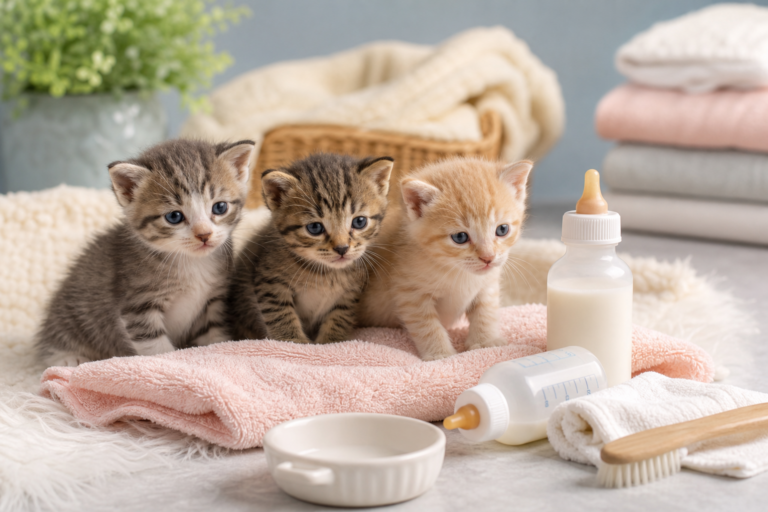
From birth until roughly four weeks of age, kittens are almost entirely helpless. Their eyes and ears are sealed shut at birth — eyes typically open between seven and fourteen days, and hearing becomes fully functional around the fourth week. Kittens cannot regulate their own body temperature during this neonatal phase, making the mother’s warmth critical to survival. She also stimulates toileting by grooming her kittens’ abdomens, a task they cannot yet manage independently. Any separation at this stage is a genuine medical emergency requiring round-the-clock bottle-feeding and supplemental heat from a human caregiver.
Weeks 4–8: Exploration and Early Socialisation
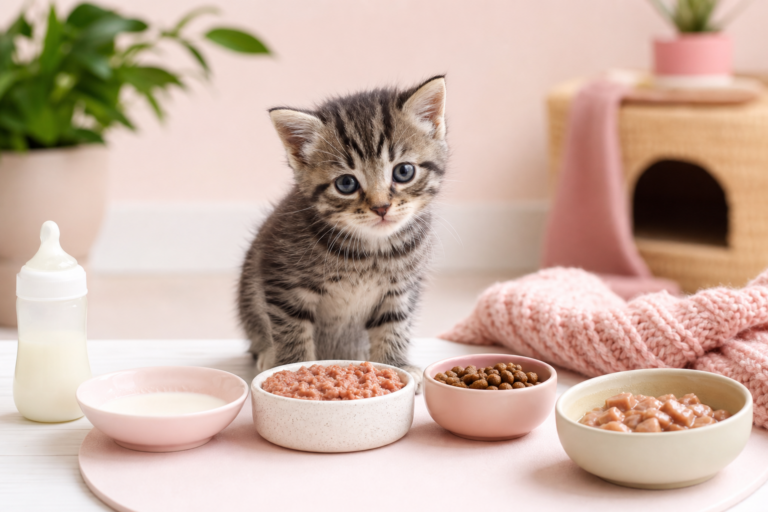
By four weeks, kittens begin to wobble around the nest, and their coordination improves rapidly. This is when the most sensitive window for socialisation opens — research suggests the critical period for forming positive associations with humans runs from approximately two to seven or eight weeks of age. Gentle, regular handling during this phase is associated with a friendlier adult temperament; even fifteen minutes of calm human contact per day during this window makes a meaningful difference. Kittens also begin transitioning to solid food (typically introduced between three and four weeks), start using a litter tray, and engage in increasingly complex play with their littermates. That play serves a vital purpose: it teaches bite inhibition and feline social communication — essentially, how hard is too hard, and how to read a sibling’s body language before things escalate.
Weeks 8–12: Continued Learning With Mother
By eight weeks, kittens are typically weaned from their mother’s milk and eating solid food independently. This is the point at which most kittens in the UK, US, and elsewhere are rehomed. Crucially, however, this is not the point at which maternal learning ends. The mother continues to model calm behaviour around humans, reinforce self-grooming habits, and mediate conflicts between siblings. Kittens that remain with their mothers through this period develop noticeably stronger impulse control and social competence. A 2017 study published in Scientific Reports by Ahola and colleagues found that kittens weaned before twelve weeks showed significantly higher rates of aggression and stereotypic behaviours — such as over-grooming and compulsive chewing — in adulthood. Separately, research published in the journal Animals found that kittens who nursed for seven weeks or more had lower rates of adult obesity, suggesting that the mother’s influence extends well beyond social skills alone.
Weeks 12 and Beyond: The Optimal Window for Rehoming
The consensus among feline welfare specialists and veterinary behaviourists is that twelve to thirteen weeks represents the ideal minimum age for rehoming. By this point, kittens have typically completed their primary vaccination course — first vaccines are usually given around eight to nine weeks, with a booster at twelve weeks — making them safer to travel and enter a new environment. Their immune systems are more robust, their individual personalities have become clearer, and they are considerably more resilient to the stress of an unfamiliar home. Kittens rehomed at this age tend to settle more quickly, display less anxiety in novel situations, and form stronger bonds with their new families.
What Kittens Learn From Their Mothers Beyond Milk
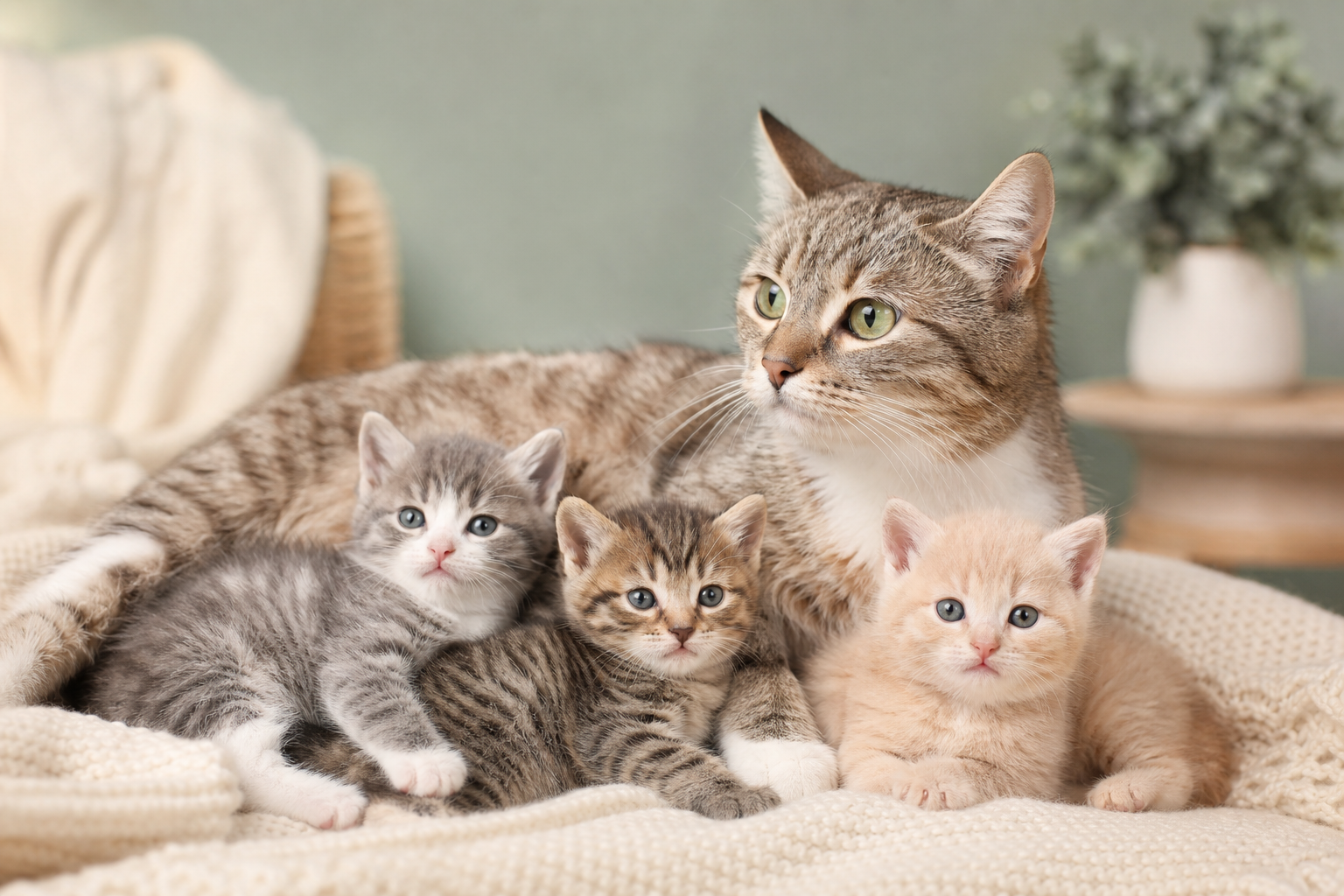
It is tempting to frame early separation purely in terms of nutrition — once a kitten is eating solid food, what more can it need? The answer lies in the distinction between weaning and education, which are separate processes that overlap rather than coincide. Mother cats actively teach kittens to engage in appropriate predatory play, to groom thoroughly, to navigate conflict without escalating to biting, and — when the mother herself is comfortable with people — to respond calmly to human handling. In the wild, these skills take months to perfect; the mother may continue to supervise and correct her young well beyond twelve weeks. In domestic settings, even a few extra weeks of maternal guidance translates into a measurably better-adjusted cat.
The Real Risks of Separating Too Early
Research consistently links early separation — particularly before eight weeks — with a cluster of behavioural problems in adult cats. These include aggression directed at both humans and other cats, heightened fearfulness in novel environments, and stereotypic (repetitive, compulsive) behaviours such as wool-sucking, excessive self-grooming, and ingesting inedible objects. Studies examining kittens separated at two weeks compared to those separated later found that early-separated kittens behaved more anxiously in unfamiliar situations, showed reduced capacity to learn, and had significantly poorer social skills with both humans and other cats. Even separation at eight rather than twelve weeks carries documented risk — the eight-week norm is shaped more by industry convention than by biological readiness.
What the Law Says
Legal frameworks vary by country and region, but many jurisdictions are gradually aligning with welfare science. In England, the Animal Welfare (Licensing of Activities Involving Animals) Regulations 2018 specify that kittens must not be sold under eight weeks of age. Scotland, Wales, and Northern Ireland have similar minimum-age provisions, as do many European Union member states. While the law sets a floor rather than a recommendation, animal welfare organisations including the RSPCA actively encourage breeders and rehoming centres to target twelve weeks wherever possible.
Signs a Kitten Is Ready to Leave
Age is the primary guide, but a few practical checks help confirm readiness before any move takes place:
- Fully weaned: The kitten eats wet or dry kitten food confidently and shows no interest in nursing.
- Litter trained: The kitten uses a tray reliably and without accidents in the nest area.
- Healthy weight and energy: Steady weight gain, active and curious behaviour, and a clean coat are all positive signs.
- Socialised: The kitten approaches humans without prolonged hiding, tolerates gentle handling, and engages readily in interactive play.
- Vaccinated: At minimum, the first round of core vaccines has been administered; ideally the full primary course is complete before rehoming at twelve weeks.
If a Kitten Arrives Younger Than Ideal
Sometimes circumstances are outside a new owner’s control — a rescue situation, a stray litter, or an urgent rehoming may mean a kitten arrives younger than twelve weeks. In these cases, enriched human interaction becomes especially important. Spend extra time on gentle, interactive play sessions to teach bite inhibition. Provide a companion animal if possible — even a calm adult cat can model appropriate behaviour. Use puzzle feeders and varied toys to stimulate problem-solving. Many veterinary practices now offer structured kitten socialisation classes, which are an evidence-backed way to fill developmental gaps. Early, intentional intervention significantly reduces the likelihood of long-term behavioural difficulties.
FAQ
Is eight weeks really too early to rehome a kitten?
Eight weeks is the legal minimum in many countries and is the most common rehoming age. However, research consistently shows that kittens placed in new homes at twelve to thirteen weeks develop better social skills, display lower aggression, and exhibit fewer compulsive behaviours than those moved at eight weeks. Eight weeks is not catastrophic, but twelve weeks is genuinely better for the kitten’s long-term wellbeing where it is achievable.
Can a kitten leave its mother at six weeks if it is fully weaned?
Physical weaning and developmental readiness are not the same thing. A kitten that stops nursing at six weeks still has weeks of critical behavioural learning ahead of it — from its mother and from its siblings. Leaving at six weeks significantly raises the risk of anxiety, aggression, and stereotypic behaviour in adulthood, and is not recommended under any normal circumstances.
What if the mother cat rejects her kittens?
A rejected kitten requires immediate human intervention: bottle-feeding with a veterinary-approved kitten milk replacer, a heat source (such as a low-temperature heating pad) to prevent hypothermia, and gentle stimulation to encourage toileting. It should be handled calmly and frequently to maintain the socialisation process. Once old enough, gradual supervised contact with a calm adult cat can help provide some of the feline social modelling that the kitten’s mother would otherwise supply.
Do male and female kittens develop at different rates?
Both sexes follow the same broad developmental timeline. However, individual variation — litter size, the mother’s health, breed, and the level of human handling received — can affect the pace at which any specific kitten reaches each milestone. Always assess readiness in the individual animal rather than relying solely on the calendar.
Sources
- ncbi.nlm.nih.gov
- sciencedirect.com
- sciencedirect.com
- cats.com
- catster.com
- pets4homes.co.uk
- completecatguide.com
- academy.royalcanin.com